
When you drive an electric vehicle off the dealership lot, it feels like a total clean break from the traditional burdens of car ownership. You say a permanent goodbye to the gas pump, and you happily wave farewell to the standard routine of the three-month oil change. It is easy to fall into the mindset that your sleek, quiet EV is a self-sustaining spaceship that requires absolutely nothing from a local garage.
At our shop, we love working on electric vehicles. The engineering is incredible, and they genuinely have far fewer moving parts than a traditional gas-powered car. However, zero tailpipe emissions do not equal zero maintenance.
Lately, we have noticed a trend of EV owners neglecting a few critical systems simply because they assume the car is entirely maintenance-free. Skipping these tasks can lead to premature wear on expensive parts and a noticeable drop in your driving range. Let us dive into the common EV maintenance tasks that drivers completely forget about.
Heavy-Duty Tire Wear
If there is one thing that shocks first-time EV owners more than anything else, it is how quickly they burn through a set of tires. You might be driving the exact same daily commute you did in your old sedan, but your EV tires are working twice as hard.
This accelerated wear happens for two primary reasons:
The Battery Weight: The massive lithium-ion battery packs that give your car its impressive range are incredibly heavy. An electric vehicle easily weighs twenty to thirty percent more than a similarly sized gas vehicle. That extra weight puts constant, heavy pressure on the rubber.
Instant Torque: Electric motors do not need to build up RPMs to move. The second you step on the accelerator, one hundred percent of the motor's power hits the pavement instantly. That aggressive force creates subtle, microscopic tire slippage every time you take off from a red light.
Because of this double-whammy of weight and torque, regular tire rotations are absolutely mandatory for an EV. We recommend bringing your car in for a rotation every 5,000 to 6,000 miles to ensure the tread wears down evenly, saving you from buying a costly new set of tires way ahead of schedule.
Brake Caliper Service
One of the coolest features of an electric vehicle is regenerative braking. When you lift your foot off the accelerator, the electric motor reverses itself to slow the vehicle down, capturing that kinetic energy and sending it back into the battery.
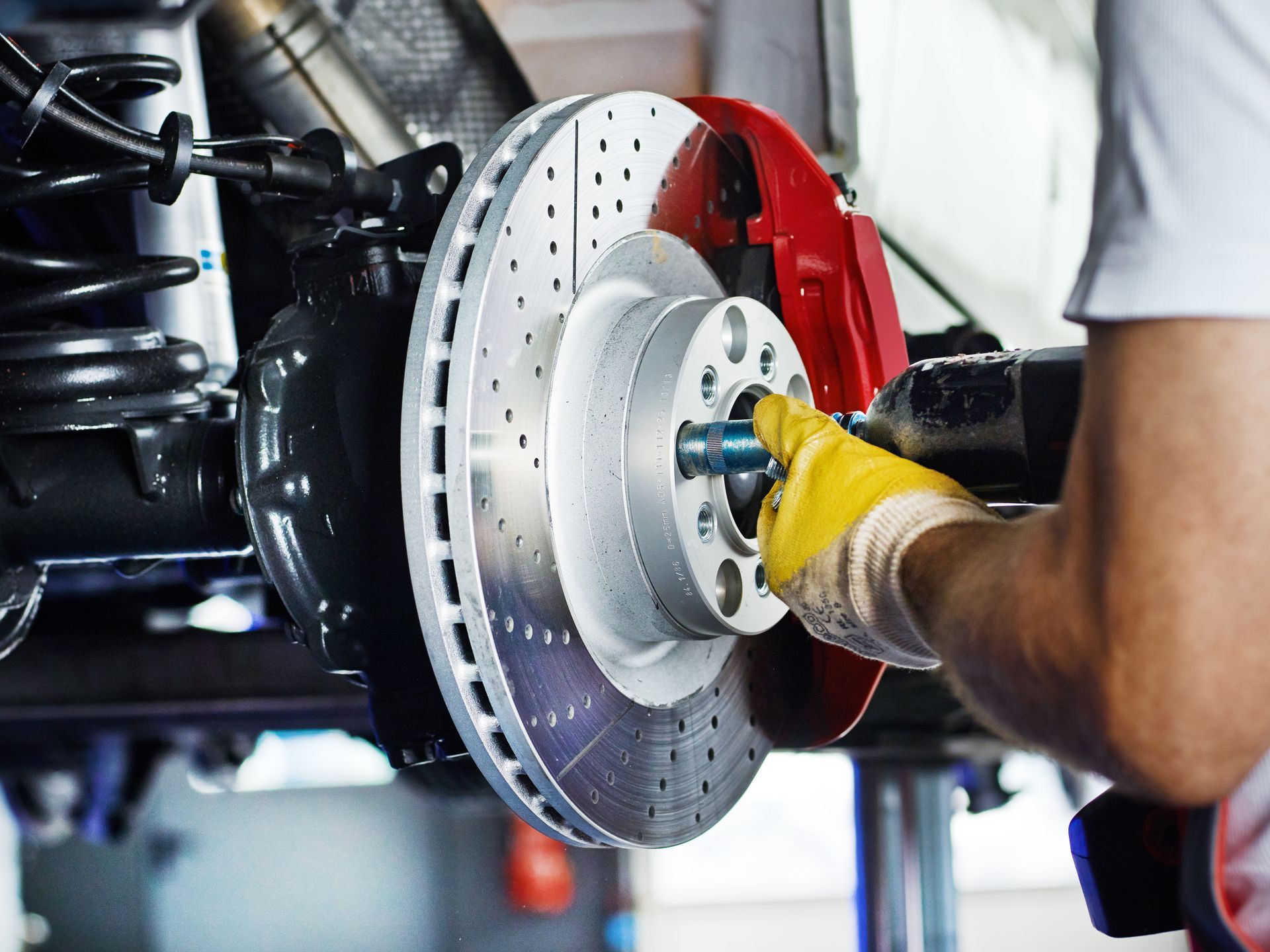
Because the motor does most of the stopping work, your traditional mechanical brake pads and rotors rarely get used during normal driving. It is not uncommon for EV brake pads to last well over 100,000 miles.
So, if the brakes barely get used, why do they need maintenance? In places where winter road salt, dirt, and moisture are common, that lack of use is actually a problem. Because the brake calipers sit idle for months at a time, they can begin to rust, seize up, or collect heavy debris. If an emergency situation arises and you need to slam on the brakes, a seized caliper might not engage properly. We recommend an annual brake service where we physically clean, lubricate, and inspect the slider pins and hardware to ensure they move freely when you need them most.
Coolant and Brake Fluid
You are officially done with motor oil, but your EV still relies on a few critical fluids to stay healthy.
First up is your battery cooling system. EV batteries are highly sensitive to extreme temperatures. To keep them from overheating during fast charging or freezing during a winter cold snap, most EVs utilize a complex liquid cooling loop filled with specialized coolant. Over time, this coolant can degrade or become contaminated. Neglecting a battery coolant flush when your manual calls for it can reduce your battery’s efficiency and shorten its overall lifespan.
Second is your hydraulic brake fluid. Just like a gas car, your emergency stopping system relies on fluid pressure. Brake fluid naturally absorbs moisture from the air over time, which lowers its boiling point and can cause internal corrosion in your brake lines. A professional brake fluid flush is typically required every two to three years to keep the system clean.
Air Filters
Since there is no combustion engine under the hood, your car does not have an engine air filter. But it absolutely has a cabin air filter designed to clean the air you breathe while sitting inside.
Because EV cabins are whisper-quiet, you will notice a dusty, whistling, or struggling HVAC fan much faster than you would over the rumble of a gas engine. Swapping out your cabin air filter every 12 to 24 months keeps your heating and cooling system running efficiently, which actually preserves your battery range by reducing the electrical load needed to run the climate control.
Let Us Keep Your EV in Peak Condition
Owning an electric vehicle is a fantastic experience, and keeping it reliable just requires a slightly different playbook. You do not need to wait for something to break to visit our shop.
Is your electric vehicle overdue for a professional wellness check?
Bring your car by
Kensington Motor Cars in Las Vegas, NV or schedule an EV maintenance inspection online today, and let our team keep your high-tech ride running right.